Wednesday, December 31, 2025

2025 harvest totals: 59.7 kilos (131 pounds)

San Marzano tomato: 3.1 kilos
Cherokee Purple tomato: 9 kilos
Sunpeach cherry tomato: 5.1 kilos
Datterino cherry tomato: 2.5 kilos
Costoluto tomato (saved supermarket seeds): 900 grams
Potatoes: 1.5 kilos
April Cross radish: 2 kilos
Trombetta squash: 2.9 kilos
Custard White pattypan squash: 1.1 kilos
Gold Rush zucchini: 900 grams
Zuccurì pumpkin: 1.2 kilos
Butternut squash: 7325 grams
Round eggplant (purchased seedlings): 4150 grams
Tayberry: 1 kilo
Paw paw (1st fruit-bearing year): 800 grams
Sublima white grapes: 15.5 kilos
Uva fragola: 425 grams
Topazia white grapes: 300 grams

Not bad for a year of weather extremes. With everything else that was going on, there was never time to do a proper post, and I think we are very close to finding our next dream home with a large piece of land!

In late summer I experimented with winter crops that are still in containers which I'll share as they develop. Here's hoping for a great 2026!

Friday, October 13, 2023

2023 recap: not the greatest year, but not bad either

I've always regarded a year's harvest a big fail when the total yield doesn't measure up to my expectations. But, as they say, it is what is. When the Black Magic grapevine died in late spring, I calculated half of 2023's yield (in weight) gone. Why did the grapevine die? My hunch is that heavy and constant rains in May turned the clay soil deep under the substrate into a dense, heavy mass that impeded drainage. The vines put out some leaves but all of it yellowed and dried up within a couple of weeks. The Sublima white grapes located directly across the Black Magic faired only slightly better. We barely got a kilo of grapes out of them. Both vines will be dug up and replaced next spring.

A lone Thessaloniki, and Sunpeach and Sungreen cherry toms from the Oishii Project

Then arrived summer and those hot hot days, interspersed with humid ones when a different weather pattern blew in. Fortunately I had saved up quite a bit of rainwater, yet the conditions were never stable enough for the tomato blossoms to set fruit on a regular basis. The cherry tomatoes did best; the slicing toms not so much. On the other end of the spectrum, tayberries and strawberries did great as usual. The Hortblue petite blueberries and pink lemonade blueberries produced more than last year, and the mojo berries put out twice the amount (about 2 heaping cups) compared to 2022.

Tayberries and mojoberries

The best garden success though was the myoga. This year it put out 13 buds, and while they were on the small side, I now know that the plant will be totally fine outside with no protection except for a layer of mulch. I pickled the buds, some sliced thin, some left whole, in a simple vinegar, water, sugar mix. They are delicious! Cross my fingers next year for an even bigger yield. There's a recipe for myoga tsukemono that I've got bookmarked to try.

Next spring the plan is to split the clump, plant half in a larger planter and the other half in the ground. I didn't give them any fertilizer except for a healthy dose of compost tea in the spring.

Another success story - the shishimai pepper plants started from seed. Five bushes were either grown in pots and grow bags. The yield was smaller than expected but I don't know if that's from having a late start or not being grown in the ground. Peppers were thin-skinned, around 3 inches in length, not hot at all, and reminded me a lot of padron peppers. Seared in a hot skillet with a bit of sea salt they're very tasty on their own. I also stirfried some with minced veal to mix in with cooked pasta.

To get a headstart next year, I pruned the plants, shook off most of the soil, and potted them up in fresh potting mix to overwinter in the house with minimal watering.

To end this post, you know you've come far as a gardener when you can color yourself happy even in the less than stellar years. In spring I was excited to create a rock garden to spruce up a dry section of the yard that's always in direct sun during summer. Put in drought-tolerant santolina chamaecyparissus (cotton lavender), Hidcote Blue lavender, California poppy (sown), and phlomis russeliana (turkish sage). Gave a good watering and they have performed phenomenally ever since.

Below is the rock garden at the end of March this year, before pulling out the erica plants. Ironically, I impulsively bought 2 more erica (Picasso Blu to the left) - a small consolation for 2023 not being the greatest, but not so bad either.

Friday, April 21, 2023

Doing the splits, self-preservation, and the ol' switcheroo

In gardening parlance, that would be division (splits), propagation (self-preservation), and this is so not what I ordered. Let's start with the 'splits'. At first, dividing plants was a task that I never felt comfortable with for fear of harming the plant. But like anything else, do it several times and you'll get the hang of it. I dug up a daylily that was planted 6 years ago and divided it into 3 clumps to plant in other areas.

The daylily was in a tight corner in hard clay and I literally had to yank it out where the garden fork couldn't reach. Planted one of the clumps next to the iris (above). Gave them a good watering and frequently checked that the ground never dried out. They're all doing well but I don't expect they'll flower this year seeing how brutal I was at digging them out.

'Self-preservation'. Propagating by seed or purchased seedlings is the easy way to go as a novice, but then there are methods like layering and runners (strawberry stolons) that I'm beginning to really appreciate because they're free! The tayberry vine puts out new canes every year but this year it grew a baby tayberry through spontaneous layering or tip layering. I prune the canes in fall as they can go on forever, so I must've missed one, the tip made contact with the ground, and during winter roots began to form.

I was surprised to see such a good-sized root ball. Tucked it into a 4-inch pot with fresh potting soil, snipped off the attached vine, and watered well. This was on April 5th; today the tiny tayberry is more than quadrupled in size. No fertilizer, just compost tea and a sheltered spot outside. I'll update the progress to see how long it takes from a tiny plant to a viable and flowering one.

Okay, it must happen at least once to every gardener, twice or even more if you're that unlucky. A specific item is purchased or ordered, but when it comes out of the ground, it's definitely not what you paid for at all. It's a switcheroo! When this happens I just hope it'll be something that I will love, but more often than not...well, that's why I never purchase more than a few of one thing at a time.

I ordered a tulip named 'Red Dress' but got this banal imposter instead. Early-blooming, very short tulip. The fringed purple one to the right is a Negrita Parrot. My husband said it looked like a deformed purple cabbage. 'Red Dress' is supposed to resemble the one below (yes I pinched it from the seller!), only more of a red than burgundy. I should've trusted my gut on this one:

The truth is that mess-ups will occur; either from the supplier's end or the eventual seller that unintentionally did a switcheroo. The important thing is that it grows, because what's the point of having a cutting garden if you can't put together your own wacky bouquet? Negrita Parrot, Red Imposter, Sunlover.

Saturday, April 1, 2023

Six on Saturday

I'm a half year late in making the crossover from The Propagator where Six on Saturday first began, but now that spring has arrived, I do hope to pop in more often at Garden Rumination's Saturday Six.

The first red bloom to appear - Anemone coronaria De Caen 'Hollandia' - is a complimentary gift from one of the usual online sources that I purchase from. Now I'm not wild about anemones but when something is for free...

As usual, aubrieta gracilis are the first purples to show up, so full of tiny blossoms and doing really well in the current cool weather. Yes they turn rather tatty when it starts to get hot, but usually around that time the cosmos are up and running.

In the fall I sow broad beans (fava beans) mainly as a cover crop but those out in the garden beds rarely make it through winter (they're not under any protection). I just work them into the ground. Those in containers are somewhat sheltered, yielding enough of a harvest for a few meals. All I need is liver and a nice Chianti.

Lamprocapnos spectabilis

Bleeding heart (pink variety) may soon have a red variety and a white lady-in-the-bath one for company. It's a pity that they don't stick around when the real heat arrives. Still, they're another spring bloom that never fails to show up.

Peonies popping through - March 21st

I've read that peonies don't like to be disturbed and was concerned that this one dug up from my in-laws' wouldn't make it. I transplanted the large clump of an herbaceous type into a 45cm terracotta planter last fall, watered it well and mulched with dead leaves. It's a pink peony (variety unknown) that my mother-in-law had for at least a decade. Last year (before it was dug up), I got about a dozen and a half sweetly scented double blooms.

Here they are now a week and a half later. Very happy to see them come back.

Today's high: 16°C / 61°F

Friday, March 31, 2023

What's in the works for the yard & garden 2023

Forsythia

Here we are again. The end of another month and the start of a new one. I missed not being able to garden last year so to make up for it, I'm leaving no flower pot, vase, or container unfilled. I want the bees and butterflies to think they've come across the motherlode of pollen and nectar! April is National Garden Month so to get a headstart on what will be a busy season, I think it's best to write down goals in order that nothing gets forgotten in the garden shuffle. There are 2 projects that need to be addressed, one of which is this area which I call the rock garden:

Rock garden started in September '22

It's the hottest spot in summer when the sun's rays reflect off the wall and onto the yard. The grass always suffers in that particular location, so I thought to mark off a section with rocks and see how it works with drought-tolerant plants. The lopsided curry plant and 'Hidcote' lavender will stay, but the 2 heather plants will go. The lavender was planted last fall and I hope to see it fill out this season. I'm considering santolina (lavender cotton) and phlomis russeliana (Turkish sage) as replacements, with california poppies scattered in between. All of those choices should do fine considering the conditions.

The 2nd project is the back part of the apartment that has a reinforced retaining wall. This wall keeps the sloped garden from tumbling down into us, but oh to look at that ugly thing when I wake up!

Initially I was convinced of a climbing vine (not ivy!), maybe a gloriosa lily? But that would mean putting in a trellis or some sort of support - not what I want to see (bare wall and trellis) in winter with the plant cut back. The northerly position excludes late afternoon sun but at least it's in open shade. The idea of a small shade-tolerant tree in a large planter does sound good though... Let's see what my better half thinks.

Today's high: 10°C / 50°F.

Friday, December 30, 2022

Year-end harvest totals; looking forward to 2023

Family matters have prevented any chance of maintaining The Proud Garden this year, so I end 2022 with the harvest count (which wasn't bad at all given the circumstances).

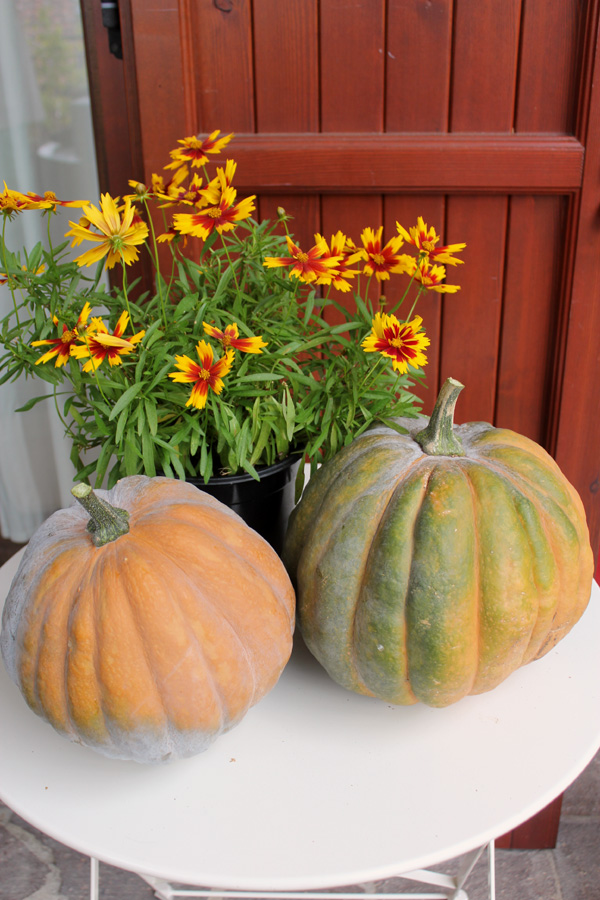
The 2 pumpkins above were volunteers from a mystery pumpkin that I had acquired the year before at my father-in-law's. I threw some of the seeds in the garden and up they came. Still have no idea what variety but the vines grew like crazy despite neglect. They made an excellent substitute for Libby's pumpkin puree though. Tasty pumpkin pie on the table and a Thanksgiving saved!

2022 totals: 111 pounds

Tayberry: 1 lb. 11 oz.
Bon Odori cukes: 3 lbs. 8 oz.
Cayenne peppers: 12 oz.
Yellow pattypan: 1 lb. 10 oz.
Clemson okra: 2 lbs. 13 oz.
Cherry tomatoes: 1 lb. 8 oz.
Tomatillo: 3 lbs. 1 oz.
Nashi pears: 10 lbs.
Mystery pumpkins: 19 lbs. 10 oz.

Grapes
Black Magic: 44 lbs.
Sublima: 10 lbs. 12 oz.
Uva fragola: 11 lbs. 11 oz.

Saturday, August 7, 2021

The Good, the Bad, and the Ugly

Heavy rains, violent storms, hail, temperatures in the scorching highs and then sudden lows - we've had it all this summer and it ain't over yet. It has been a real challenge in the garden, enough that I'm considering giving it a rest the following year. But knowing myself, that won't be 100% true and there will have to be something growing somewhere even if it's in a simple vase. Taking stock of what worked and what didn't, I figured it's time to come up with a strategy so I can work smarter, not harder.

The Good

Cucurbits. The pattypans, bi-color "Zephyr" summer squash, uchiki kuri and even the tiny cucamelons pulled through despite the wild weather, voracious slugs and constant presence of powdery mildew. As long as I can keep up with slaying the slugs, the summer squashes should be okay until the temperatures begin to drop. Pattypans are not well-known in Italy; my husband thinks they look like something a Hobbit would grow.


Blackberries, pattypan, cucamelons

Also doing good are the Sublima and Black Magic grapes. I pruned excess vines and leaves in early summer to allow for more sunlight and air circulation. I never have the heart to thin clusters (for bigger grapes) but I reckon more is better. What we can't eat will go into the compost bin.


Sublima Seedless and Black Magic

The Bad

Stinkbugs! They've become more of a nuisance as each year goes by. Last year they damaged the majority of the nashi pears, inserting their needle-like mouths into young fruit. This year they took a liking to the tomatoes and I've tossed more into the compost bin than onto my plate.

The damage is called 'cloudy spot'. Doesn't matter if the toms are still green or ripe, stinkbugs feed on both. It's time to throw in the towel on large tomatoes; they're harder to cultivate up here in the mountains and not worth the trouble anymore.

The Ugly

The stinkbug should've been the ugly poster child but the blackberries don't look all that pretty this year. It's very possible that I have the beginning of a problem with eriophyd mites. In short, they're itty bitty nasties not visible to the naked eye. At first I thought stinkbugs were the culprit but I found information regarding a commercial fruit grower in northern Italy who experienced mite (acari) damage in their blackberry bushes. The mites, for whatever reason, seem only to feed on thornless blackberry plants.

I should just stick with thorny berry bushes. They're a pain to harvest but nothing bothered the tayberries or gooseberries this year.

2021 totals:

Fava beans: 5 lbs.
Mara de Bois: 7 lbs. 7 oz.
Framberry: 1 lb. 14 oz.
Tayberry: 1 lb. 10 oz.
Red gooseberry: 10 oz. Blackberry: 1 lb. 7 oz.
Cucamelon: 1 lb. 4 oz.
Parisian Pickling: 5 lbs. 8 oz.
Pattypan: 4 lbs. 12 oz.
Uchiki kuri: 6 lbs. 10 oz.
Zephyr squash: 3 lbs. 11 oz.
Cherokee Purple: 1 lb. 6 oz.
Costoluto Genovese: 11 lbs.
Paul Robeson: 5 oz.

Grapes
Black Magic: 30 lbs. 11 oz.
Sublima: 10 lbs. 1 oz.
Topazia: 1 lb. 5 oz.
Uva fragola: 1 lb. 7 oz.

Friday, July 2, 2021

The garden in July

The second half of the year already! At this point in the season it is now a waiting game in the vegetable garden: waiting for fruits or vegetables to mature and ripen, hoping for much needed rain, and praying for the summer heat to be done and over with. We haven't experienced the heat like elsewhere in Italy at lower altitudes but I expect that to change in July and August. I took these photos yesterday during my morning inspection of the garden.

The blackberries (thornless variety) should be ready to pick from August to September. This year I'm freezing harvests for smoothies and mixed berry pies.

The row of Peruvian ground cherry/poha berry plants are really growing slow in this space. I have others growing elsewhere that are 3 times bigger but still no flowers. I've read that it takes 6 months from sowing to harvest so with a little good fortune, something will eventually come of them.

Patty pans and Zephyr summer squash (pictured above in top photo). Like last year, the patty pans are taking their time finding their groove. The bi-color Zephyrs on the other hand, are already producing. I have most of these growing vertically on stakes to maximize space, and I hand-pollinate new baby squash every morning for a better success rate (the bees are not so much this year).

Cherokee Purple and Paul Robeson tomatoes recently started to set fruit. I know we need rain, but thankfully the sparse precipitation means less chance of the plants getting fungal diseases. I always worry about this if it really pours early on in the season but so far, so good.

I predict that we'll be harvesting at least 50 pounds of grapes this year. The white varieties that we have (Topazia and Sublima) put out plenty of flower clusters; same goes for the Black Magic grapes that did very well the previous year. Grape jelly is on the list of things to make but the harvest is really so much that it's impossible to give enough of them away.

Lastly, the bed containing the mini-variety watermelons (Yellow Cutie and Piccolina) and okra. Both took forever to develop in the greenhouse but once it was warm enough and safe (no more slugs) to set them out, they do seem to have grown some. I'm experimenting with training the watermelons to grow on the wire fencing for the most part but also allowing some to sprawl on the ground.

Today's high: 29°C / 84°F

Monday, June 28, 2021

Super Poppy 'Heartbeat'

Is there such a thing as Poppyholics Anonymous? Apparently I can't get enough of them and here's another that I grew this year. 'Hearbeat' is bred from Oriental poppies and therefore comes back each spring. Touted a 'Super Poppy' due to its weather-resistant characteristics (they hold up well during inclement weather), I started it from bare root stock 3 springs ago. The first year nothing came up and I thought it was just bad stock. But then the year after it sprouted leaves and grew into a good-sized plant and put out a couple of flowers. This year it definitely found its groove, producing a half dozen gorgeous blooms.

The orange-red color in the photo is not true to Heartbeat's real hue. It's more like a red, brownish-orange and they really stand out in the flower garden. The flower stems are incredibly sturdy, as so are the petals when compared to other poppies with delicate, whisper-thin petals.

Above: before an impending rainstorm. Below: after the storm. I figured there had to be some truth to the claim of being weather-resistant but I wasn't expecting this. The salmon-colored Icelandic poppies received a beating but Heartbeat stands tall and strong. As a cut flower the blooms keep longer too, so this is another plus. Anticipating the garden catalogs in fall for next year's papaver fix!

Friday, June 11, 2021

Amazing Grey

All of the poppies growing in my flower bed (Oriental and Iceland) were started as nursery plants or rootstock, so growing Amazing Grey from seed was a nice little experiment to learn from. Honestly, if I had known how easy it is to grow this species of poppy (papaver rhoeas), I might've included them on my grow list each year.

Amazing Grey is simply gorgeous. The subtle shades of lavender, grey-lavender, grey-white, blue-grey of the petals are unique. Blooms range in size from 1 - 2 inches / 2.5 - 5 cm in diameter. I've seen photos of Amazing Greys that were maybe twice the size of mine so I can't be sure if it was an improved cultivar.

In late winter I scattered seeds in an 18-inch pot; seedlings quickly emerged but it took until mid-spring for them to really develop. Daily temperatures were beginning to warm up but it still got cool at night (around the 50's fahrenheit). Not willing to risk a sudden cold snap, I covered the pot at the end of the day with an overturned leaf bag.

Naturally I'm saving the seed pods for next year's sowing. The only change would be to sow in early spring to give seedlings a better chance at developing.

Monday, May 31, 2021

A whole lot of stuff going on

The first ripe Mara de Bois strawberry

Sowing seeds, potting up, taking cuttings, weeding, transplanting starts, feeding, fertilizing, putting up protection on cold nights, digging holes and even drilling holes - May is always such a busy month!

Until I get everything into the ground and the irrigation system up and running, the most that I'm able to show is all in these pictures taken a week ago. Fortunately the weather has been cooperative with nights in the mid-teens and days in the low 20°s (celsius). Sunny to partially sunny days and light winds maintain these cool conditions, so I haven't seen a big growth spurt in the more heat-loving plants.

Mercado de Paris carrots (small, round, sweet variety) grown in an 18-inch container. Netting to keep out cabbage moths.

In the greenhouse: pattypan squash, Yellow Cutie and Piccolina watermelon, okra, pak choi, cucamelon (Mexican sour gherkin), and echinacea seedlings.

Like I said, I also drill holes! In 5-gallon buckets that is. There's something liberating about going into my husband's workspace and pawing through his carpentry tools. One day I will learn how to use the table saw, or better yet, chainsaw!

Cracked open a dried up passion fruit, threw it in some dirt and this happens.

Started way too many physalis peruviana (poha berry) from seed and hope they'll take to our mountain climate. I'd say the germination was 100% with all of the little seedlings that popped up.

This is Bartzella, my first Itoh peony grown from rootstock. Only in its 2nd year but it produced 3 blooms (last year I got only leaves). Now I understand why all the fuss over peonies; they're beautiful, elegant, and just breathtaking. This one has a lemony scent; I'll be potting up to a larger, permanent container as there is no space to put it into the ground.

Lastly, zephyr bi-color summer squash and Red Kuri seedlings. Waiting for them to fill out a bit before transplanting into the ground. I'll be staking and growing the zephyrs vertically to allow space for the Red Kuri to develop and sprawl underneath.

Next month: putting the last of the seedlings out and hopefully, the first harvest of fall-sown broadbeans.